








Why do companies invest so much in client relationship management (CRM) instead of focusing only on acquiring new customers? After all, new clients bring fresh revenue and often adopt new products faster, while existing customers may go quiet for a while. At first glance, it may seem more efficient to chase new demand rather than nurture old relationships. In reality, the economics tell a different story. As little as 5% increase in customer retention can lead to a positive change in revenue and bring up to 25%–95% ROI from improving relationships. Although building customer loyalty requires significant investment in marketing, onboarding, service, and support, it pays off. While losing an established client means losing all of that value at once.
In this article, we’ll guide you through some of our top insights on crafting an impactful client relationship management strategy for your business. Keep reading to take your CRM game to the next level.
What Is Client Relationship Management?
Client relationship management encompasses the entirety of your organization’s efforts to engage with potential, fresh, and established clientele. A robust client relationship strategy typically comprises three main levels:
- A well-structured system for monitoring and overseeing client interactions (e.g., CRM software)
- Clear goals and milestones for nurturing client connections (e.g., enhancing customer retention).
- Designated representative tasked with managing client relationships.
At its core, customer relationship management revolves around cultivating and sustaining connections with current and prospective clients, supported by technological tools like CRM software. This entails gathering and analyzing customer data to heighten satisfaction levels and foster client allegiance.
CRM systems offer a suite of potent tools encompassing contact management, communication integration, sales automation, and various customer experience enhancements. These tools aim to optimize customer engagements, gather authentic feedback, and fortify relationships with clients, ultimately fostering enduring partnerships.
The Relevance of a Client Relationship Management Strategy
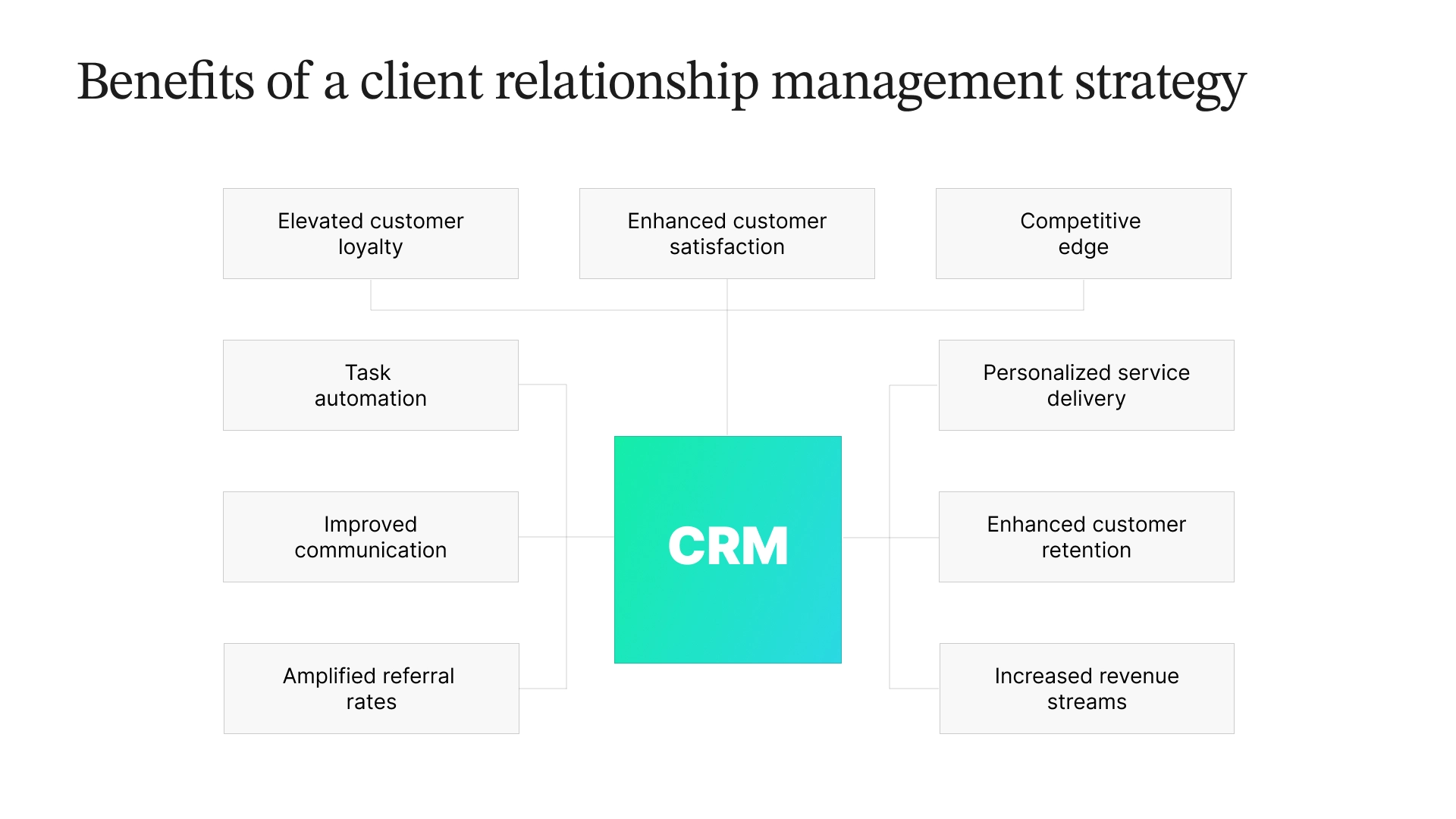
Client relationship management stands as a cornerstone for businesses, wielding the power to forge and fortify enduring connections with clients. Through adept management of client partnerships, businesses can elevate levels of customer loyalty, satisfaction, and retention, fostering a robust foundation for sustained success.
For sales teams, the integration of CRM technology heralds a paradigm shift, automating an array of sales-related tasks. This automation not only curtails the time and resources expended on nurturing potential leads but also streamlines the process of onboarding new customers, thus optimizing marketing expenditures.
Moreover, CRM tools serve as invaluable assets, enabling businesses to gain profound insights into the needs and preferences of their clientele. By discerning emerging product or service demands, suggesting bespoke solutions, and uncovering opportunities for upselling or cross-selling, CRM systems pave the path toward enhanced revenue streams and amplified profitability.
The consistent, positive interactions facilitated by a robust CRM platform act as the adhesive that binds businesses to their most valued clients, fostering enduring relationships. In essence, client relationship management encompasses a spectrum of principles, practices, and technologies aimed at engaging and enchanting clients.
Top Benefits of Effective Client Relationship Management
Investing in client relationship management holds the potential to revolutionize the trajectory of your business. From fortifying client retention to fostering organic growth through referrals, CRM best practices serve as the cornerstone of sustainable success.
Let’s dig deeper into the key benefits of adeptly managing client relationships.
Elevated customer loyalty
If your company implements an effective CRM, it will positively affect one of the most important and sought-after metrics, customer loyalty. And this means repeat business engagements.
Enhanced customer satisfaction
Knowing the specific needs and preferences of clients, being able to act proactively to provide your clients with what they need before they even think about it, is key to elevated satisfaction levels.
Improved communication
A well-maintained CRM system is all about understanding and collaboration. Build transparent, honest, and open relationships with your clients from the very beginning, and you’ll see how
Amplified referral rates
Word of mouth remains one of the most powerful growth engines. Loyal customers don’t just generate repeat purchases, they become advocates. They influence peers, validate your brand, and lower the cost of future acquisition in a way no ad campaign ever can.
Increased revenue streams
Nurturing strong client bonds paves the way for recurring business and upselling opportunities, ultimately bolstering revenue generation.
Enhanced customer retention
Constant customer churn also prevents sustainable growth: a business that keeps replacing customers instead of retaining them is stuck in survival mode. Whereas a robust CRM strategy focuses on client retention. And wins.
Competitive edge
In today’s markets, it is increasingly difficult to outperform competitors through product quality or marketing approaches alone, because everyone is constantly pushing to improve in those areas. Where true competitive advantage can still be gained is in Proficient CRM management, in how communication is built, and how companies interact with their clients.
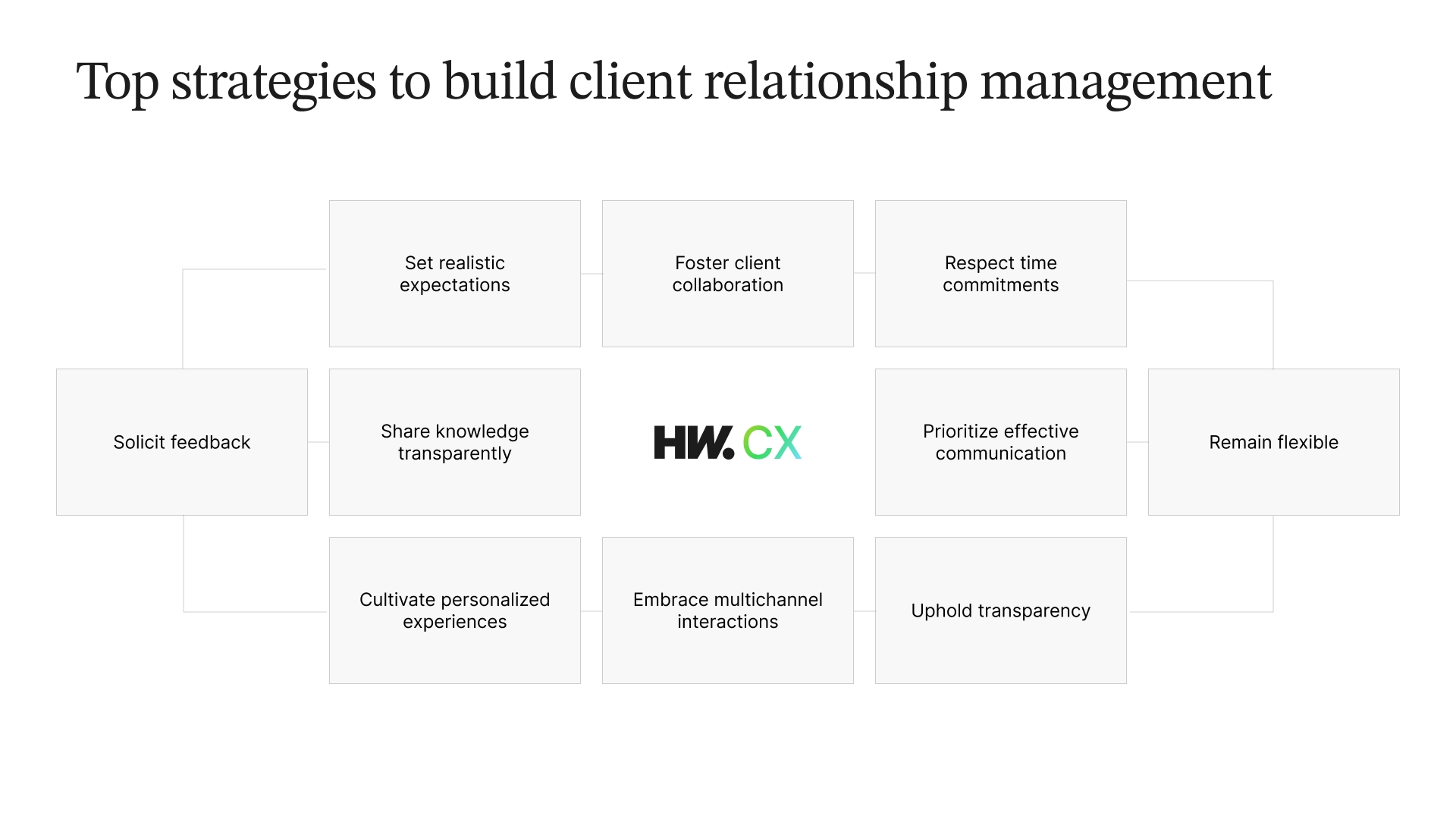
Top 10 Strategies for Upscaling Client Relationship Management
At Helpware, we’ve successfully enhanced CRM outcomes for numerous companies operating in digital-focused industries globally. Drawing from our own experience, we’ve identified several tactics that consistently foster prosperous partnerships for clients aiming for long-term growth alongside their service providers.
Here are some of the most relevant strategies for building long-lasting relationships with perfectly matched clients:
1. Foster client collaboration
Promote client engagement at each stage of the project. Incorporating customer insights into your CRM process development is a crucial strategy that will enable your team to understand the client’s deepest needs, challenges, history, and preferences throughout the various phases of your partnership. Whether it’s tracking interactions or even needing to find someone’s phone number for a quick follow-up, having the right data at your fingertips strengthens client relationships.
2. Respect time commitments
While client involvement is crucial, it’s equally important to respect their time. Avoid overburdening them with lengthy meetings or unnecessary approvals. Instead, designate a dedicated project manager or customer success manager to handle queries promptly and ensure seamless communication.
3. Prioritize effective communication
Proactive disclosure of information and consistent communication with clients not only saves time for both of you but also alleviates any future concerns that may appear down the road. As highlighted in the Axios HQ internal communications report, 67% of organizations that increased their investment in communications saw better customer retention, increased alignment with business goals, and improved market reputation. By staying connected and addressing their needs promptly, you build trust and minimize the risk of clients seeking other alternatives.
4. Embrace multichannel interactions
Tailor communication to suit each client’s preferences by leveraging a personalized mix of communication channels. Whether through phone calls, live chats, or emails, ensure you have universal consent before initiating communication through any of these channels. Implementing a Google-based CRM can significantly simplify managing multichannel interactions by seamlessly integrating your CRM with familiar Google Workspace tools like Gmail, Drive, and Calendar. This becomes especially helpful when you’re managing multiple projects and want to avoid miscommunication or delays.
5. Cultivate personalized experiences
Implement a warm and professional tone to demonstrate your commitment to each client’s unique needs. Addressing clients by name and customizing experiences based on their preferences fosters a sense of individuality and strengthens loyalty.
6. Share knowledge transparently
Facilitate knowledge sharing with clients to empower them and ensure alignment with project objectives. Transparent discussions minimize misunderstandings and build trust by demonstrating your expertise and commitment to their success.
7. Remain flexible
In navigating client requests, maintain objectivity and flexibility to accommodate the client’s needs without compromising project integrity. While it’s essential to meet their expectations, prioritize the project’s long-term success and viability.
8. Uphold transparency
Transparency breeds accountability and strengthens client relationships. Be forthcoming about successes and setbacks, accept responsibility for any missteps, and demonstrate a commitment to honesty and integrity.
9. Set realistic expectations
Avoid overpromising and underdelivering by committing to realistic project goals and timelines. Exceeding expectations when feasible adds value and fosters goodwill, contributing to long-term client satisfaction. Gantt chart software can help visualize your goals and timelines.
10. Solicit feedback
Actively seek client feedback to gauge satisfaction levels and identify areas for improvement. Embrace constructive criticism as an opportunity for growth, and demonstrate appreciation for their input through acknowledgment and recognition.
Improve Your Client Relationship Management with Helpware
If you put your clients at the heart of everything you do and back it up with a solid CRM strategy, you’re not just chasing short-term wins—you’re building relationships that last. Client management can be tricky at times, but here’s the golden rule: when your clients feel valued, your success naturally follows.
At Helpware, we’re all about helping your team thrive. Our platform grows and adapts as your clients’ needs change, so you’re never standing still. By blending the right people, smart processes, and powerful technology, we give businesses the tools to build stronger, lasting connections with the partners who truly fit.
Would you like to learn more about our BPO-powered CRM methodology? We’re here to guide you and your team through one of the most effective client relationship management strategies in the industry.